
For example, when a business sells a product, it records the revenue in a revenue account and the cost of goods sold in an expense account. Gain a deep understanding of the Double-Entry System in Finance and Accounting with BMC Training. The next section will discuss common mistakes businesses make in the double-entry system and how to avoid them. Double-entry bookkeeping is an accounting method where each transaction is recorded in 2 or more accounts using debits and credits.
- Basically, double-entry bookkeeping means that for every entry into an account, there needs to be a corresponding and opposite entry into a different account.
- This system is a more accurate and complete way to keep track of the company’s financial health and how fast it’s growing.
- This is crucial for maintaining trust with stakeholders, investors, and regulatory bodies.
- This step matters because the direction of change determines whether you’ll debit or credit each account.
- The bookkeeper keeps the books accurate and up-to-date, while the accountant provides valuable business insights.
- The concept of double entry accounting is the basis for recording business transaction and journal entries.
Understanding TS GREWAL DOUBLE ENTRY BOOKKEEPING CLASS 11 PDF 2022
They will either increase the asset and expense accounts or decrease the revenue, equity, and liability accounts. Financial reporting is essential for maintaining transparency and accountability in business operations. It helps stakeholders understand the financial health of a company and make informed decisions. Financial statements are also used by investors, creditors, and other stakeholders to evaluate the company’s performance and determine its future potential. In contrast, single-entry accounting does not provide the same level of Cash Flow Statement checks and balances.
Enroll in Accounting and Financial Training Courses
Goodbudget is a personal finance app based on the envelope budgeting system, but with a few tweaks to help modernize the method. Look at your regular monthly spending on things like rent or mortgage payments, utilities, loan payments, insurance, transportation, child care, groceries and subscriptions. Don’t forget to include your contributions to savings, like a 401(k), IRA or high-yield savings account.Go through and label each as a fixed or variable. Housing costs, insurance, loan payments and gym memberships are fixed, while entertainment, food, travel and clothing are variable. double-entry accounting It’s essentially a digital version of envelope stuffing, assigning a category to all of your money, and comes with an easy-to-use interface and lots of education tools. Remember, solid bookkeeping lays the foundation for a successful, sustainable business.
Spend more time growing your business
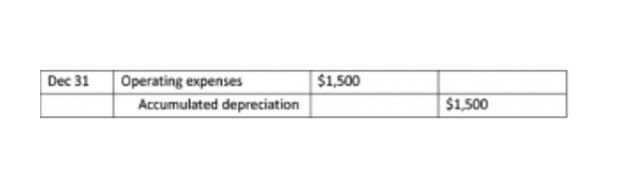
Both cases reflect an increase in cash available while recording the obligation to repay the loan, keeping the accounts balanced. This entry increases both assets (cash) and revenue, showing the impact of the sale on financial health. Organize your accounts into a chart that outlines the account types so it’s easier to record transactions and generate reports. Cash accounting records transactions when cash changes hands, whereas accrual accounting records transactions as they occur, regardless of the cash flow.
While both double-entry and single-entry accounting are methods for tracking business finances, they differ significantly in complexity and accuracy. The basic rule is that debits grow your assets, expenses, and owner withdrawals, while credits grow your liabilities, equity, and income. Because you bought the inventory on credit, your accounts payable account also increases by $10,000. The double entry accounting method offers a number of benefits to organizations adopting it all in terms of accuracy, systematic organization, and better performance monitoring. Single-entry bookkeeping is a record-keeping system where each transaction is recorded only once, in a single account.
- The double entry system is more organized and helps assess the overall financial scenario of a company.
- By keeping track of revenue, expenses, and profits, businesses can make informed decisions about their operations.
- This involves comparing the balances in the general ledger with the balances in the subsidiary ledgers.
- The main difference between single entry and double-entry bookkeeping is that single entry bookkeeping only records one side of a transaction, while double entry bookkeeping records both sides.
- Financial statements are a summary of the financial transactions that have taken place during a specific period and include the balance sheet, income statement, and cash flow statement.
- You can also connect your business bank account to make recording transactions easier.
Double entry accounting, also called double entry bookkeeping, is the accounting system that requires every business transaction or event to be recorded in at least two accounts. In other words, debits and credits must also be equal in every accounting transaction and in their total. Accurate debits and credits are central to double-entry bookkeeping, and it’s your bookkeeper’s job to ensure each transaction keeps your accounts balanced and error-free. Every transaction must be recorded in at least two accounts, with one account debited and one account credited.
Scenario 4: $1,000,000 Equity Issuance for Cash

When determining the appropriate adjustment to cash, if a company receives cash (” inflow”), the cash account is debited. But if the company pays out cash (” outflow”), the cash account is credited. #3 – Nominal Accounts – Debit all Expenses and Losses and Credit all Incomes and Gains. Nominal accounts include all the Expenses, Income, Profit, and Loss accounts. For example, the Salary Paid account is debited, and the rent received account is credited. Real accounts include Pant & Machinery, Buildings, Furniture, or any other Asset account.
The double entry is based on the debit and credit accounts of the transaction. As your business adds new customers, products, or locations, your finances naturally get more complicated. Double-entry bookkeeping makes it easier to track multiple income streams, manage expenses, and monitor assets and liabilities—all without losing control. On the other hand, the double-accounting system involves recording each transaction in two accounts—both a debit and a credit. This helps balance your books and gives a more comprehensive view of your finances. Managing your small business finances can feel like juggling a hundred things at once—especially when trying to keep your books in order.

This will not only improve accuracy but also enhance your decision-making capabilities. Managing payroll involves various expenses, tax withholdings, and liabilities. A double-entry system helps you stay compliant and ensures your wage-related accounts stay balanced. For example, if you buy new equipment (an asset), you might either take on a loan (a liability) or spend cash from your account (reducing an asset). Each movement is recorded in two places, which helps ensure nothing slips through the cracks. This entry records the increase in accounts receivable (an asset) and the increase in sales revenue (an equity account).

By recording http://www.greenbusinessteam.se/blog/2022/09/26/gusto-bbb-complaints-better-business-bureau/ all financial transactions accurately, businesses can monitor their financial health, identify areas of improvement, and make informed decisions. Double entry bookkeeping is an essential tool for businesses of all sizes to keep accurate financial records. Proper record-keeping helps businesses to monitor their financial health, identify areas of improvement, and make informed decisions. Accounting software has revolutionized the way businesses handle their financial transactions. It has made it easier to keep track of financial records, generate reports, and manage cash flow. With the advent of accounting software, double-entry bookkeeping has become more accessible and efficient.

